Japan Earthquake / Tsunami

DISCOVERING RIKUZENTAKATA

Within three days of the disaster, Embracing the World sent its first group of volunteers to the affected areas to assess the situation on the ground and to distribute food and water for the refugees. After working near the disaster's epicenter, ETW's relief teams soon focused their efforts on Rikuzentakata, a remote coastal town of 23,000 people in dire need of support. Located more than 150 kilometers from the nearest major city, Rikuzentakata was hit hard by the earthquake and tsunami but had not received sufficient relief assistance before ETW's teams arrived.

A DEVASTATED COMMUNITY

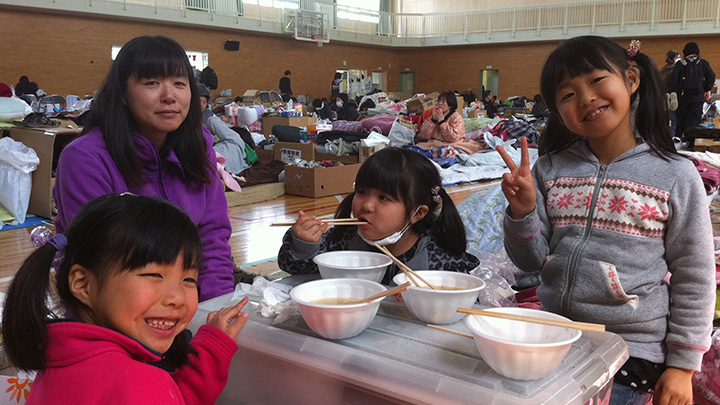
Approximately 10% of Rikuzentakata's population died in the disaster, including nearly one third of the city's officials. At the end of April 2011, at least 70% of the original population was spread across 88 refugee centers, as their households were damaged or destroyed. After their initial visit, the city's Disaster Relief Management Office submitted an official request to ETW to continue its disaster relief efforts there. ETW began to organize regular relief trips to the town, bringing food, supplies, and hands willing to help.

GOING FORWARD

ETW's work at Rikuzentaka has included: supporting the refugees in the camps by cooking and serving food; maintenance and laundry services; removing mud and debris from damaged houses; cleaning up public spaces; sorting and transporting relief supplies; delivering tons of fresh vegetables; and applying organic antibacterial cleaner in each of the 88 refugee centers in the city. The volunteers also worked to clear rubble from farmers' fields, so they could start cultivation in time for the growing season.

For more on-the-ground reports and photos from Japan, please visit our blog.

Photos

ETW's relief teams soon focused their efforts on Rikuzentakata, a remote coastal town of 23,000 people in dire need of support.
Located more than 150 kilometers from the nearest major city, Rikuzentakata was hit hard by the earthquake and tsunami but had not received sufficient relief assistance before ETWís teams arrived.
In parts of the town, there were no recognizable structures remaining.
In the background, what remains of the town's City Hall. More than one third of city officials died in the disaster.
ETW volunteers working to clear debris.
ETW volunteers cleaning out a damaged house.
The floor boards have to be completely removed from each house in order to remove the sludge from the tsunami--otherwise the house's foundations will rot.
ETW volunteers washing found clothing in a stream for use by the refugees.
ETW volunteers distributing clothing and shoes at a shelter for refugees.
An ETW volunteer cooks for refugees at a shelter.
ETW is regularly delivering tons of fresh vegetables to Rikuzentakata.
Because the city formally requested ETW's help, our vehicles received a special access permit from the Japanese government and are exempted from highway tolls.