Bihar Floods

On August 18th 2008, the Kosi River broke through a man-made embankment in Nepal. The flooding was massive and engulfed half the neighboring state of Bihar in India. One million rendered homeless. The prime minister declared Bihar in a state of national calamity. According to the World Health Organization, 3.3 million people in 1,850 villages were affected, with one million rendered homeless. Crops were devastated, and there was no drinking water. In the worst affected regions, only treetops were visible above the waterline.

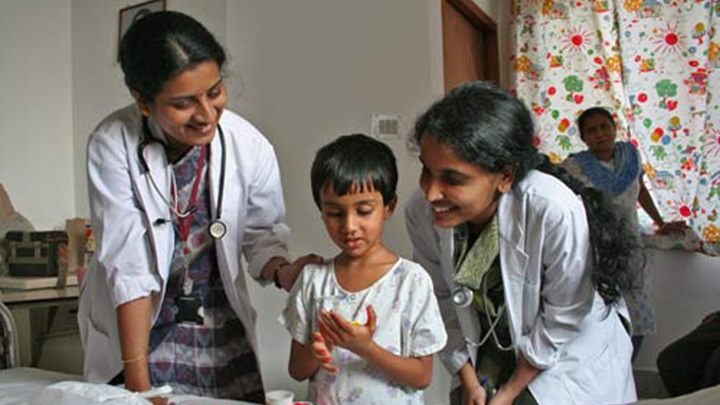
On September 10th 2008, ETW pledged $465,000 US towards relief.  AIMS Hospital dispatched teams of specialists and paramedics who treated more than 500 patients daily.

Two state-of-the art ambulances were sent to the area via rail from Kochi - a total of distance of almost 2,500 km. One of the ambulances was AIMS Hospital's Mobile Telemedicine Unit, which includes X-ray facility, ECG scanner, pathology-lab-work facility, specialty cardiac services and a telemedicine satellite link with AIMS Hospital. It was first used in ETW's tsunami-relief work in Kerala and Tamil Nadu.

The medical team remained in Bihar for more than two months, treating 50,000 people through 100 medical camps. $70,000 US in medicine was provided. Thousands of tents, blankets and tarpaulins were distributed along with cooking stoves and vessels, food, clothing, and educational materials. A temporary hospital was set up in Supaul.

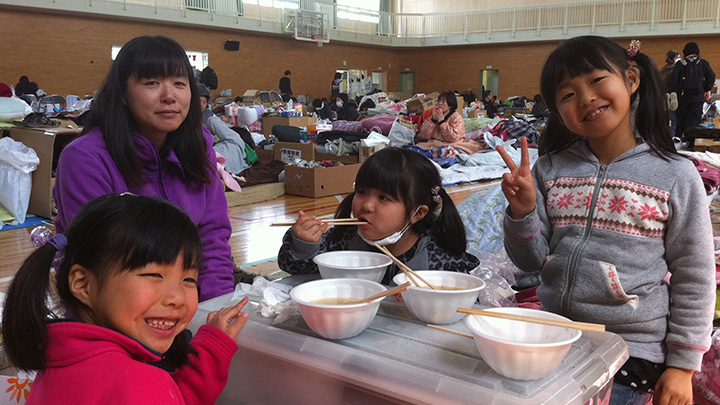
ETW volunteers established the first base camp in the district of Purnia, where three temporary shelters for the homeless were quickly constructed in Bhawanipur. A second camp with four shelters was established in Laharniya, Supaul District. At one point, when construction supplies were delayed, ETW volunteers went to a nearby bamboo forest and fell, loaded and transported bamboo poles themselves. Having witnessed their dedicated actions, a journalist wrote in the next morning's paper, "They do not depend on the facilities available to them. They get their work done by sheer will power." The shelters in Purnia were completed on September 16, 2008, and those in Supaul on October 11, 2008. In total, 1,500 displaced flood victims were housed in temporary homes, equipped with kitchens, toilets, and clean drinking water.  In ETW's relief camps, temporary classes were arranged - for children aged three to six, and a separate section for those aged seven to 15. School supplies such as notebooks and pencils, were distributed to the children.

Bihar's Minister for Labour, Avdesh Narain Singh, expressing his gratitude to ETW, said, "The people of [Embracing the World] are working day and night to serve the flood victims. In fact, I wonder if they are even sleeping at night! We are very thankful to ETW for accepting our appeal and rushing to help us in this time of need."

Three months following the disaster, the government assumed the second phase of relief and rehabilitation efforts. The waters have receded in most places, a majority of the people have returned to their villages, and are now immersed in efforts to rebuild their lives.

back to top

On August 18th 2008, the Kosi River broke through a man-made embankment in Nepal.
The flooding was massive and engulfed half the neighboring state of Bihar in India. One million were rendered homeless.
According to the World Health Organization, 3.3 million people in 1,850 villages were affected.
In the worst affected regions, only treetops were visible above the waterline.
On September 10th 2008, ETW pledged $465,000 US towards relief.
ETW dispatched its Mobile Telemedicine Unit, which includes X-ray facility, ECG scanner, pathology-lab-work facility, specialty cardiac services and a telemedicine satellite link with ETW's tertiary care hospital.
ETW's medical team remained in Bihar for more than two months, treating 50,000 people through 100 medical camps.
$70,000 USD in medicine was provided.
ETW's teams teams of specialists and paramedics treated more than 500 patients daily.
ETW volunteers established the first base camp in the district of Purnia, where three temporary shelters for the homeless were quickly constructed in Bhawanipur. A second camp with four shelters was established in Laharniya, Supaul District.
Thousands of tents, blankets and tarpaulins were distributed along with cooking stoves and vessels, food, clothing, and educational materials.
1,500 displaced ?ood victims were housed in temporary homes, equipped with kitchens, toilets, and clean drinking water.
The floods devastated Bihar's crops, and drinking water was scarce. ETW's volunteers provided much needed food and water for flood victims.
In ETW's relief camps, temporary classes were arranged for children aged three to six, and a separate section for those aged seven to 15. School supplies such as notebooks and pencils, were distributed to the children.
ETW volunteers remained in some of the worst-affected areas until the victims' lives regained a sense of normalcy.